Second cohort starts May 19th

The AI-Product Fellowship
for Experienced Builders

For Product Managers, Designers, and Engineers with 8+ years experience.

Five weeks. Four team projects of product + designer + engineer, building together. Let's build with others!

Apply for Cohort 2
Free for Cohort 2 · Product leaders · Tue/Thu 4–5:30pm EST · Ship with a team
Elizabeth Ferrao
Elizabeth Ferrao is a senior product leader with 10+ years building products at Time Inc, American Express, and C Spire. She's taught product at General Assembly, mentored 80+ people into product roles with an 80% placement rate, co-founded Women Who Code NYC (now 18,000 members), and shipped 3 startup-in-enterprise products. She's been in the room for every major platform shift of the last decade — and she's not about to sit out this one.
✉ Email Elizabeth 💼 LinkedIn
80+
People mentored
80%
Placement rate
18K+
WWC NYC members
3
Startup-in-enterprise

Not a 101 class. For Techies already Building.

Who This Is For
Product, designers, and engineers who've shipped. You've built products end-to-end, you've vibe-coded, and you want to learn how your role works alongside the others in the AI era.
What This Is
A fellowship modeled on "Building Imaginary Worlds" — a course inspired by Walt Disney Imagineering where computer scientists and artists create together. 4 sprint themes across 5 weeks. Each sprint: learn the concept Tuesday, build with your team, demo Thursday. Culminates in Demo Day for friends and family.
Prerequisite
You've shipped a product end-to-end. You've vibe-coded before. You can commit to building with a team Tue/Thu for ~6 weeks.
Free for Cohort 2. Building should be fun and creative. We're exploring a new cohort-based fellowship model to pair you with a new team every week.
The 101 stuff? You've got it.
  • Shipped a prototype in Lovable
  • Written and iterated on copy with ChatGPT
  • Built a deck from a prompt in Gamma
  • Summarized a doc or meeting with Copilot
  • Replaced a research tab with AI
  • Run analysis on data using AI
  • Auto-transcribed and summarized a meeting
  • Generated and used images with DALL-E or Midjourney
  • Launched a chatbot without writing code

This course starts where all of that ends.

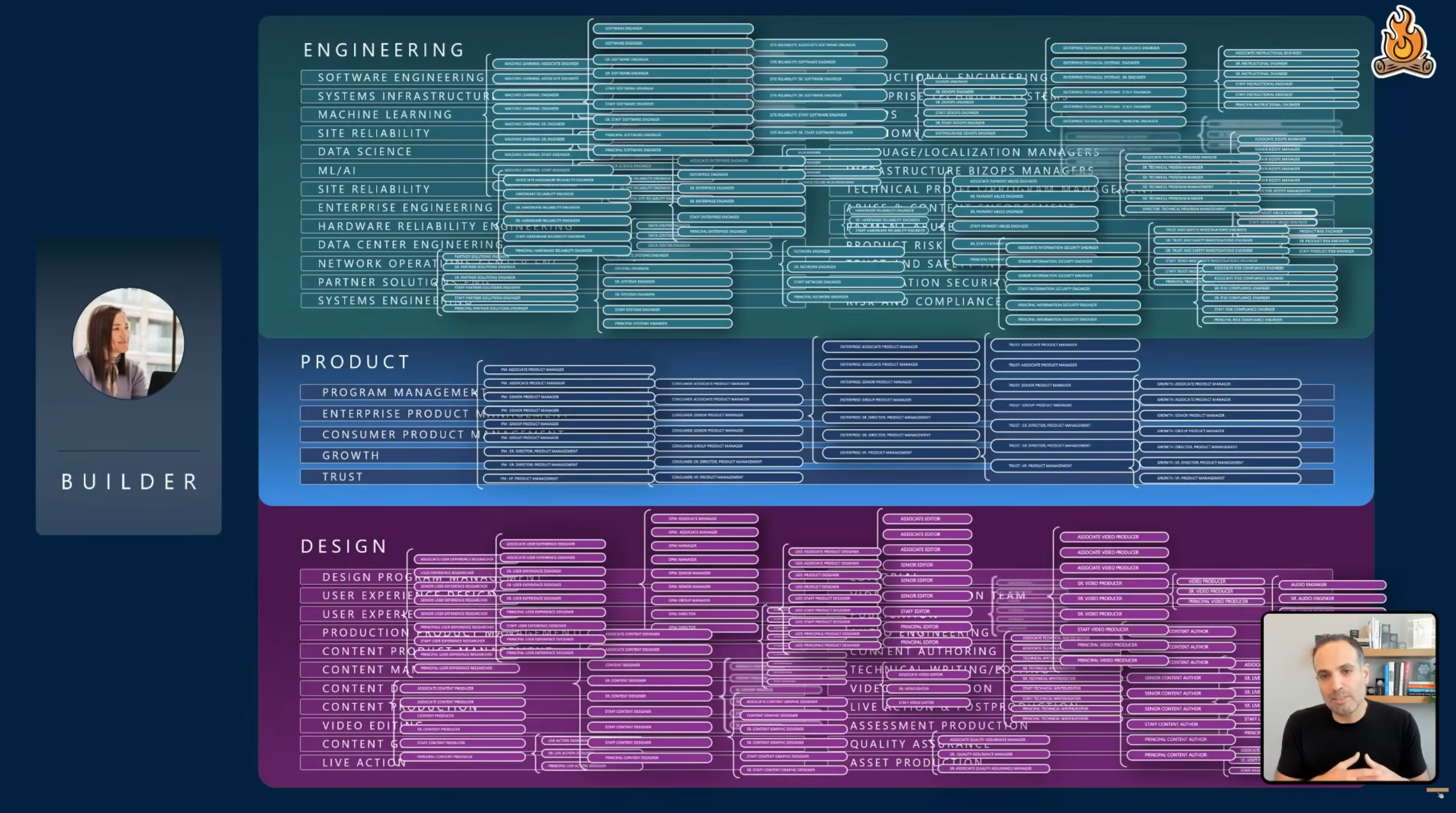
Specialty roles are being collapsed. Here's the data.

Right now, thousands of senior product, design, and engineering leaders are grinding through sprint planning, stakeholder decks, and Jira grooming — while a smaller group is quietly building full products with AI, alone, in a weekend. The era of 6 specialty roles on one product team is ending. Companies are collapsing growth product, data product, platform product, and technical product into a single role — one that can build, evaluate, and ship alongside AI. The generalist is back, and the opportunity is real.

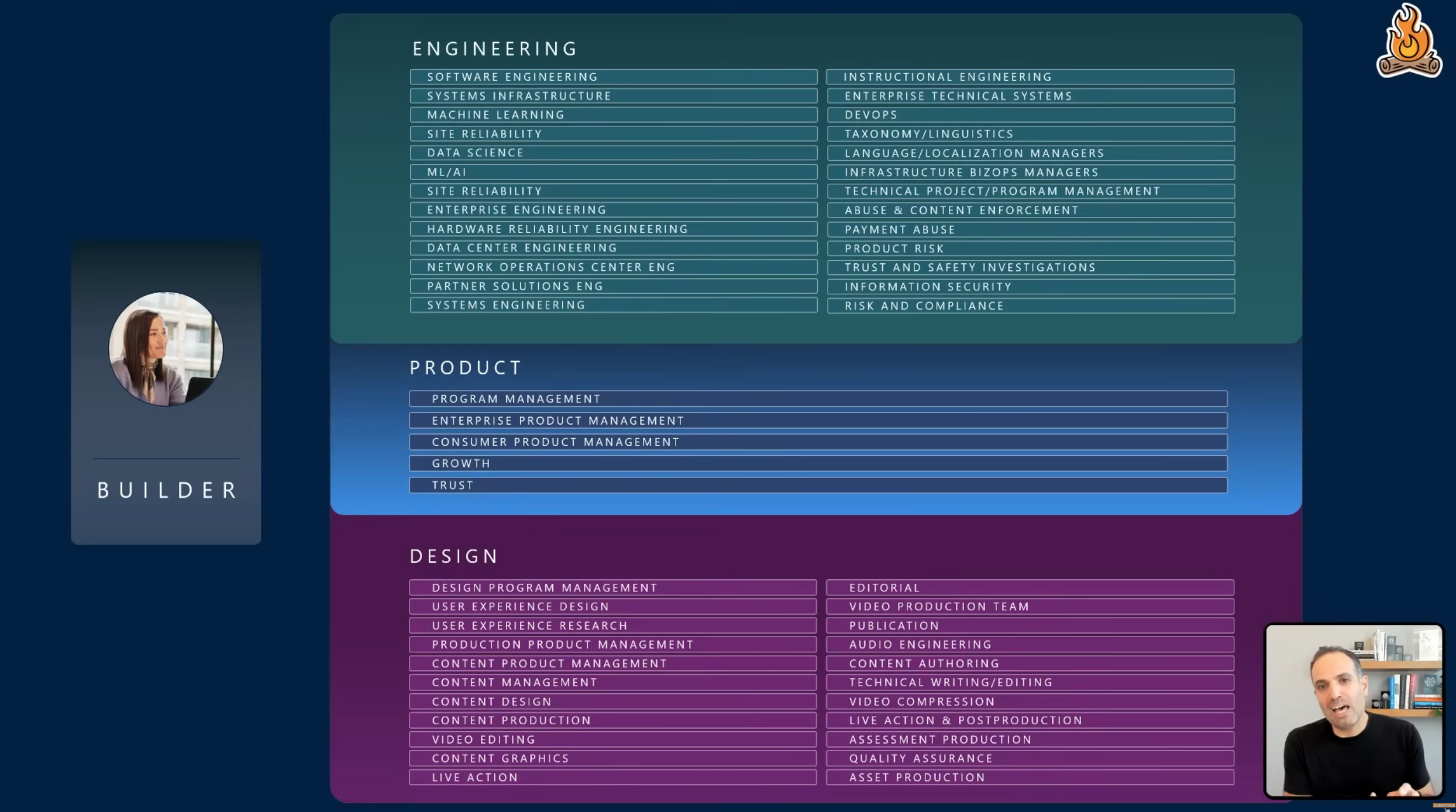
All specialty product, engineering and design roles — Lenny's Podcast with Tomer Cohen
Tomer Cohen, CPO at LinkedInLenny's Podcast
Every specialty role under Engineering, Product, and Design — the full scope of what's being consolidated
Specialty roles collapsing into the Builder role — Lenny's Podcast
Lenny's Podcast with Tomer Cohen
Those dozens of specialty roles, being collapsed into one: the Builder
5
Five capabilities are replacing every specialty title. Vision, empathy, communication, creativity, and judgment — the skills Tomer Cohen says he's "working really hard to automate" and keeps failing. These are yours to own. Watch the talk →

The 5 skills that survive every platform shift

AI is getting very good at writing code, generating copy, running analyses, and producing drafts. What it cannot do is decide what matters, understand what users actually feel, or know when something is subtly wrong. Those are judgment calls — and they're yours.

Senior leaders across product, design, and engineering are converging on the same 5 capabilities as the durable core of the role. This course is built around all five. Every class, every sprint, every tool you learn is in service of one of them — not the other way around.

The five most important skills for full stack builders are: vision, empathy, communication, creativity, and judgment. Everything else? "I'm working really hard to automate it."
Tomer Cohen, CPO at LinkedIn · Lenny's Podcast
Vision
Deciding what to build, for whom, and why it matters — before a single line of code is written
Empathy
Understanding users deeply enough that you can tell when AI-generated output misses the point
Communication
Translating between what users need, what the business wants, and what's technically possible
Creativity
Finding the non-obvious framing, the unexpected solution, the angle nobody else saw
Judgment
Knowing when output is subtly wrong — the skill that makes you the irreplaceable evaluator in the loop

The builder's toolkit

Core
Cursor · Claude / Claude Code · Lovable
Build
Taskmaster · Supabase · Git worktrees
Connect
MCP servers · Claude Code plugins
Orchestrate
Intent / Conductor · Adversarial multi-model testing
Design
Figma Make · Component libraries · .cursorrules
Ship
Vercel · Sentry · Posthog
Knowledge
Supabase pgvector (RAG)

4 team sprints. New theme every week.

Each sprint = 2 classes. Tuesday: learn the concept, get your team, start building. Thursday: demo what you shipped. Then a new theme begins.

Sprint 1 · Vibecoding

Vibecoding for someone else

Yes'anding your teammate's work and changes. The skill: building on someone else's foundation, not just your own.

Sprint 2 · Custom LLM

Create a Custom LLM with a Ralph loop

Claude + OpenAI are generalized LLMs — how can you create a custom one? The skill: fine-tuning AI for your product.

Sprint 3 · Evals

Website search ability by agents

Websites are inherently hostile to bots! How can you turn your website into being agent-friendly?

Sprint 4 · RAG

Website authority by LLMs

How can your business be recommended by the big LLMs — OpenAI and Claude — as authority + links?

Demo Day · June 19 · 3:00 PM EST

Demo Hour

Every sprint produces a shipped artifact — Demo Day is where you show the best of it. Invite your friends and family.

Tools are the vehicle, not the destination. We're using Cursor, Claude Code, and Supabase because they're the best tools right now — not because they'll be the best tools forever. The goal is for you to understand AI-native building deeply enough that when the stack changes, you adapt in days, not months.

What our first cohort had to say

"If you are in tech and want to level up using AI tools, there's no better way than building in the open with others. The discussion, tool suggestions, prototypes, and demos bring ideas, excitement, and motivation… a flywheel for builders."
PU
VP, 3AM Innovations
"The class activities were a great forcing function to try out different AI tools and actually build something useful. I deployed my first ever pull request in the class, something I never thought I would do. Highly recommend!"
MK
SVP, FoundersCard
"It really helped me level up and was able to apply the knowledge across both as a product mgr and small business owner."
VC
Senior Product, Two Six Accelerator and Founder
"The cohort pushed me from thinking about ideas to actually building. Being surrounded by a high-caliber group shipping real projects created a level of accountability and inspiration that's hard to replicate alone."
HC
Data and AI Executive

5 weeks. 4 sprints. Demo Day.

Mon
Tue
Wed
Thu
Fri
Sat
Sun
May
11
12
13
14
15
16
17
18
19
Class 1
20
21
Class 2
22
23
24
25
26
Class 3
27
28
Class 4
29
30
31
June
1
2
Class 5
3
4
Class 6
5
6
7
8
9
Class 7
10
11
Class 8
12
13
14
15
16
Class 9
17
18
Class 10
19
Demo Day!
20
21

Tue & Thu, 4:00–5:30 PM EST · Demo Day Fri Jun 19, 3:00 PM EST · 5 weeks + team work between sessions

Hey — I'm Elizabeth.

I've spent 10+ years building products at Time Inc, American Express, and C Spire. I've taught product at General Assembly and mentored 80+ people into product roles. I co-founded Women Who Code NYC and grew it to 18,000 members.

Here's how I think about this moment — and why I built this course:

1
Everything is changing for product, designers, engineers — and it's a little scary. The role we've built our careers around is being restructured in real time. That's real, and it's okay to name it.
2
But the same things that have always made you an exceptional product, designer, engineer are even more important now. Vision. Empathy. Communication. Creativity. Judgment. These aren't soft skills — they're the skills AI keeps failing to automate.
3
Bring all of that to bear alongside a community of builders who want to grow with you. Everyone's talking about AI tools but nobody's sitting next to you showing you how they actually work. That's what this is.
4
Walk out of 4 weeks knowing you can do this — because you just did.
The tools are new. The evaluation skill is not. You've spent 8+ years knowing what good looks like — that judgment is your superpower. This course teaches you to encode it into the systems you build.

— Elizabeth

FAQ

Who is this for?
Senior product leaders (8+ years) based in the US who've shipped real products and want to learn the AI builder tools. You should already be able to vibe-code a basic prototype — this course starts where "intro to AI tools" courses end.
Is this really free?
Yes! In the spirit of collaborative gain — these are the tools and fundamentals we'll be using for the next 3–5 years. It's really important to me to find sustainable models to upskill without putting the burden on us, the ones whose jobs are shifting from underneath us. No hidden upsell, no pitch at the end.
What's the time commitment?
5 weeks, May 19 – June 19 (Tue & Thu, 4–5:30pm EST) + building with your team between classes. Expect ~4–5 hours per week total.
What do I need before starting?
Basic experience with vibe coding. You should also have accounts for Cursor Pro, Claude Pro, GitHub, Supabase, and Vercel, and Claude Code CLI installed. I'll send detailed setup instructions before we start.
Will I have a portfolio of shipped products?
Yes! A portfolio of shipped team projects spanning vibecoding, custom LLMs, agent-readable websites, and LLM authority — plus a Demo Day presentation you can invite friends and family to.
How is each class structured?
Every class has a theme. You'll learn the basics of that subject matter, then get into your groups to make a project and explore it more. There will be demos every class.
What if I miss a class?
We ask for 8 of 10 classes minimum. Your team is counting on you, so this works best when everyone shows up and treats it like a priority.

Ready to build — together?

Free for Cohort 2. Five weeks. Ship with a cross-functional team every week.

Apply for Cohort 2 →