From Lenny's Podcast with Tomer Cohen, CPO at LinkedIn

How the Product Manager
Is Becoming a Product Builder

The role isn't disappearing. It's expanding — to own the entire product lifecycle, from insight to launch, with AI handling the execution at every stage. Here's exactly how it happens.

Based on Tomer Cohen's talk on Lenny's Podcast  ·  timestamps 5:11–16:07
1
The Lifecycle You've Always Had to Navigate

Eight stages. Dozens of tasks. A team to execute each one.

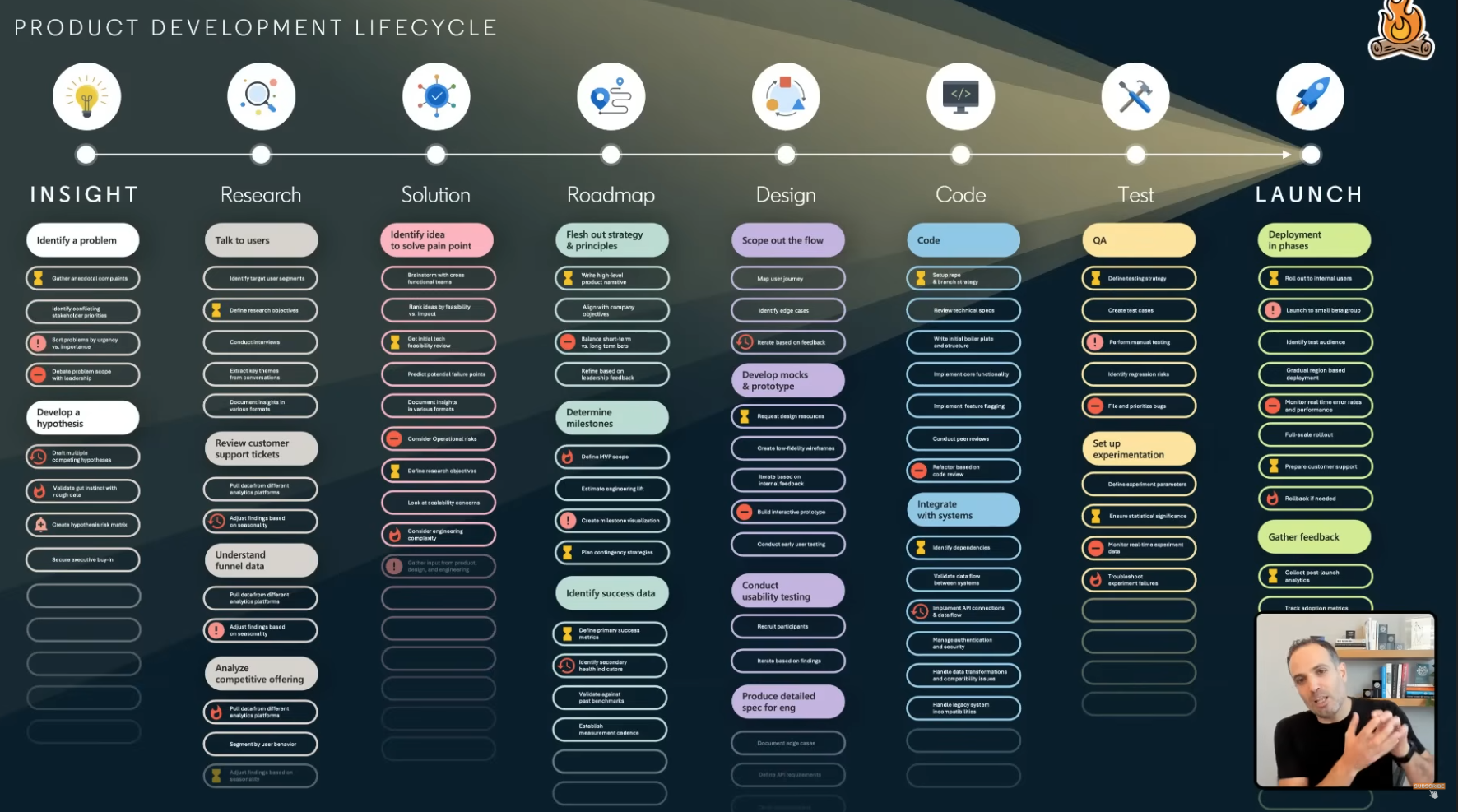
Tomer opens by putting the entire product development lifecycle on screen. It's something every PM knows in their bones: Insight → Research → Solution → Roadmap → Design → Code → Test → Launch. Eight stages, and at each one, a column of execution tasks deep enough to scroll.

Identify a problem. Talk to users. Define research objectives. Conduct interviews. Brainstorm with cross-functional teams. Rank ideas by feasibility vs. impact. Scope out the flow. Write boilerplate. Implement core functionality. Define testing strategy. Deploy in phases. Gather feedback. Track adoption. The list goes on.

This has always been your map. The PM's job was to navigate it — to hold the vision, the priorities, and the decisions — while specialists executed at each stage. A researcher here. A designer there. An engineer, a QA, a data analyst. The PM as coordinator of a team that did the execution.

Product Development Lifecycle — full detail view
Product Development Lifecycle — from Insight to Launch, with every sub-task at each stage. This is the scope of what building a product actually requires. It used to take a full team.
The Model
PM defines direction + priorities. Specialists execute at each stage. The PM's leverage comes from coordinating across the team — not from doing the work at each stage personally.
2
Then AI Agents Entered Every Stage

The execution layer just got automated.

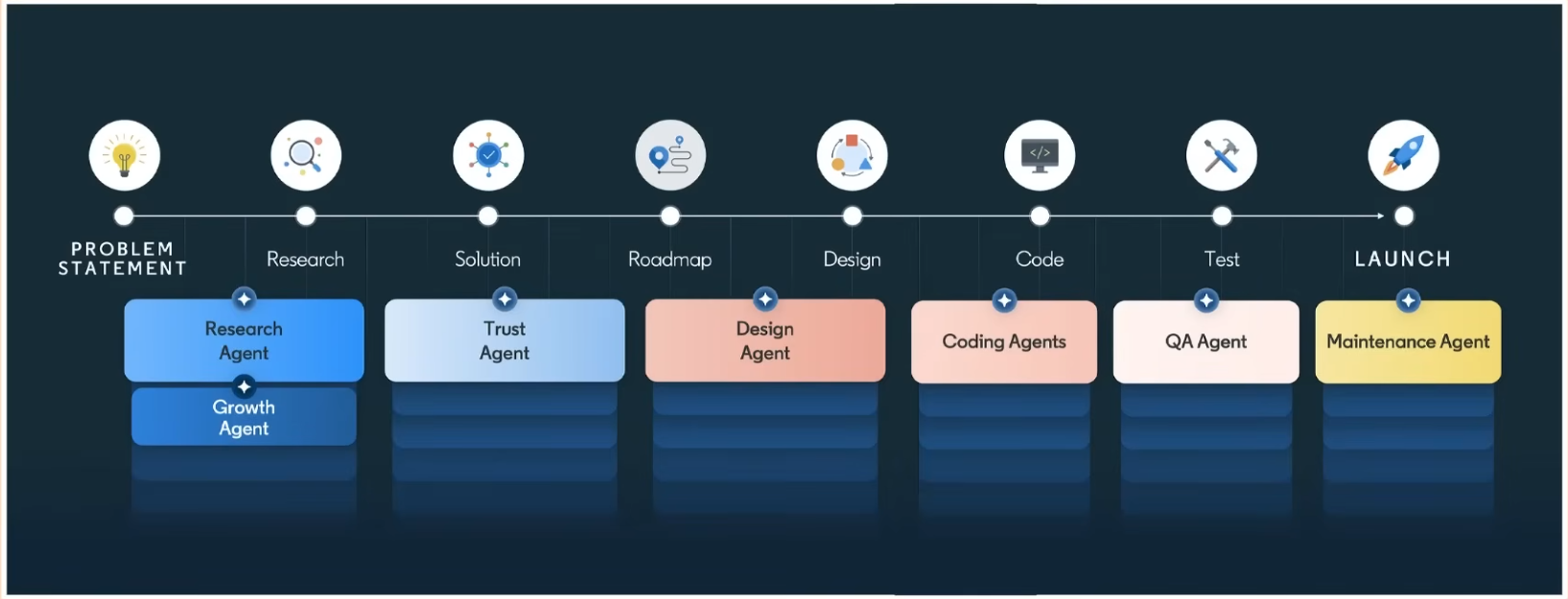
Now Tomer adds a layer to the same lifecycle diagram. Under each stage, an AI agent. And not as a vague future possibility — as a present-tense reality that's already being deployed at LinkedIn and across the industry.

Research Agent and Growth Agent at Insight and Research — synthesizing user interviews, pulling competitive intel, identifying patterns across thousands of signals. Trust Agent at Solution — flagging risks and tradeoffs in real time. Design Agent at Design — generating components, mocks, and interaction flows. Coding Agents at Code — writing, reviewing, and refactoring the actual implementation. QA Agent at Test — generating test cases, running regressions, finding edge cases. Maintenance Agent at Launch — monitoring, flagging errors, and surfacing post-launch data.

Product Development Lifecycle with AI Agents
AI agents at every stage. Research Agent, Growth Agent, Trust Agent, Design Agent, Coding Agents, QA Agent, Maintenance Agent — the execution layer at each stage of the lifecycle now has an AI handling it.

Every stage that used to require a specialist to execute now has an AI agent doing that execution — at your direction. This doesn't mean the specialist skills disappear. It means they're no longer the bottleneck. And it means the person who directs the agents needs to understand the full lifecycle — not just their one stage in it.

"I'm working really hard to automate everything except the five skills that make a great builder." — Tomer Cohen, CPO at LinkedIn
3
What This Creates

One person. The entire lifecycle. Insight to Launch.

Here's the slide that makes it click. If AI is handling the execution at every stage, the role of coordinator of specialists dissolves. What replaces it isn't a smaller PM job — it's a bigger one.

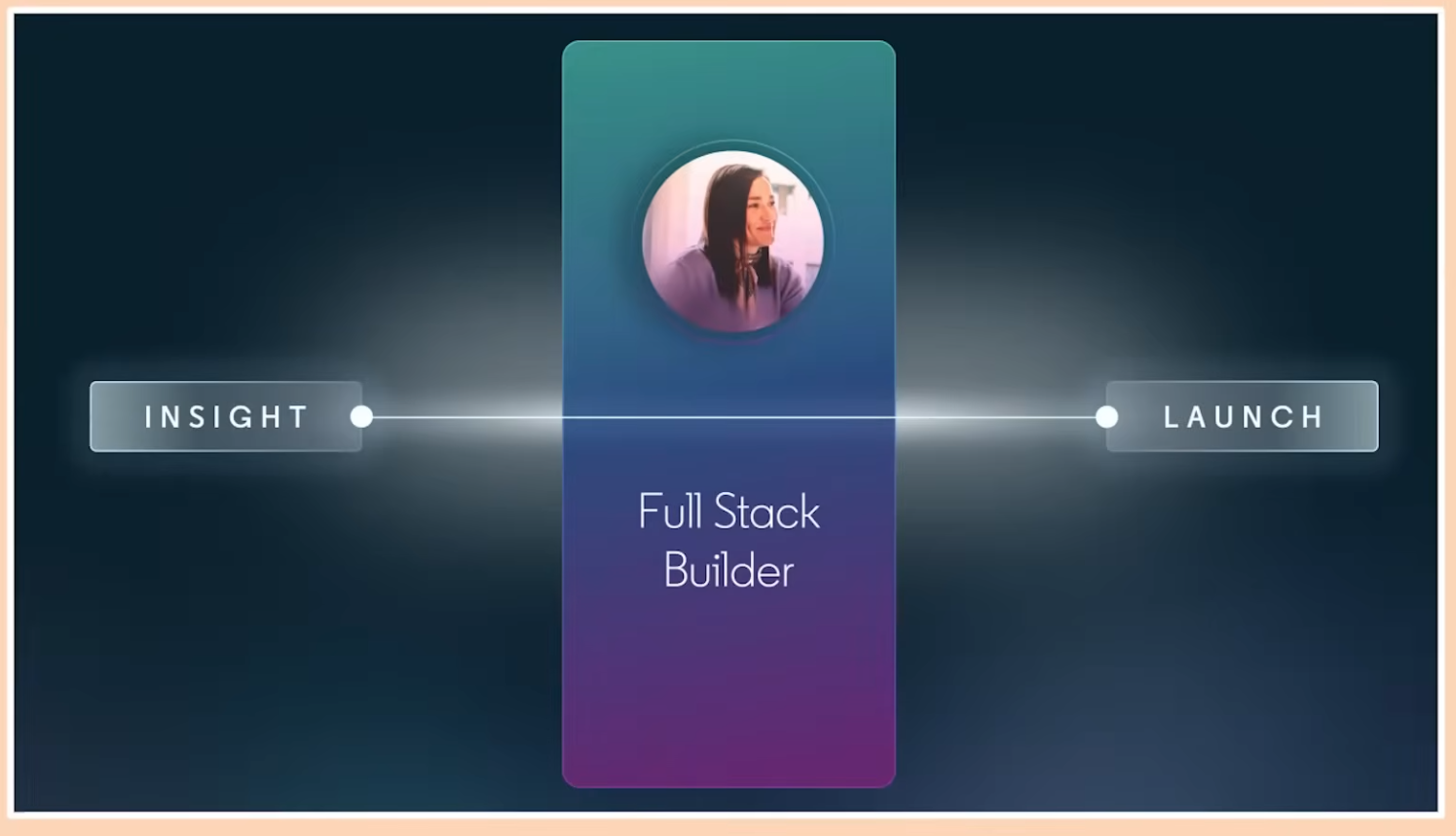
The Full Stack Builder. A single person who owns the entire journey from Insight to Launch. Not because they're doing everything manually — that was never the point. But because they can now direct, evaluate, and course-correct at every stage of the lifecycle. The PM moves from coordinator to owner.

Full Stack Builder — Insight to Launch
The Full Stack Builder. One person in the center of the entire lifecycle — spanning from Insight on the left to Launch on the right. The coordinator role is replaced by the owner role.
The Shift in One Line
Before: PM coordinates specialists through the lifecycle.
After: PM directs AI agents through the lifecycle — and owns the result end to end.

This is why the specialty PM titles are collapsing. Growth PM, Platform PM, Data PM, Technical PM — these roles existed because execution was siloed. When AI handles execution, silos become redundant. What remains is the person with the judgment to direct the whole system.

4
What's Human vs. What's Machine

Your decade of PM experience is the entire top layer.

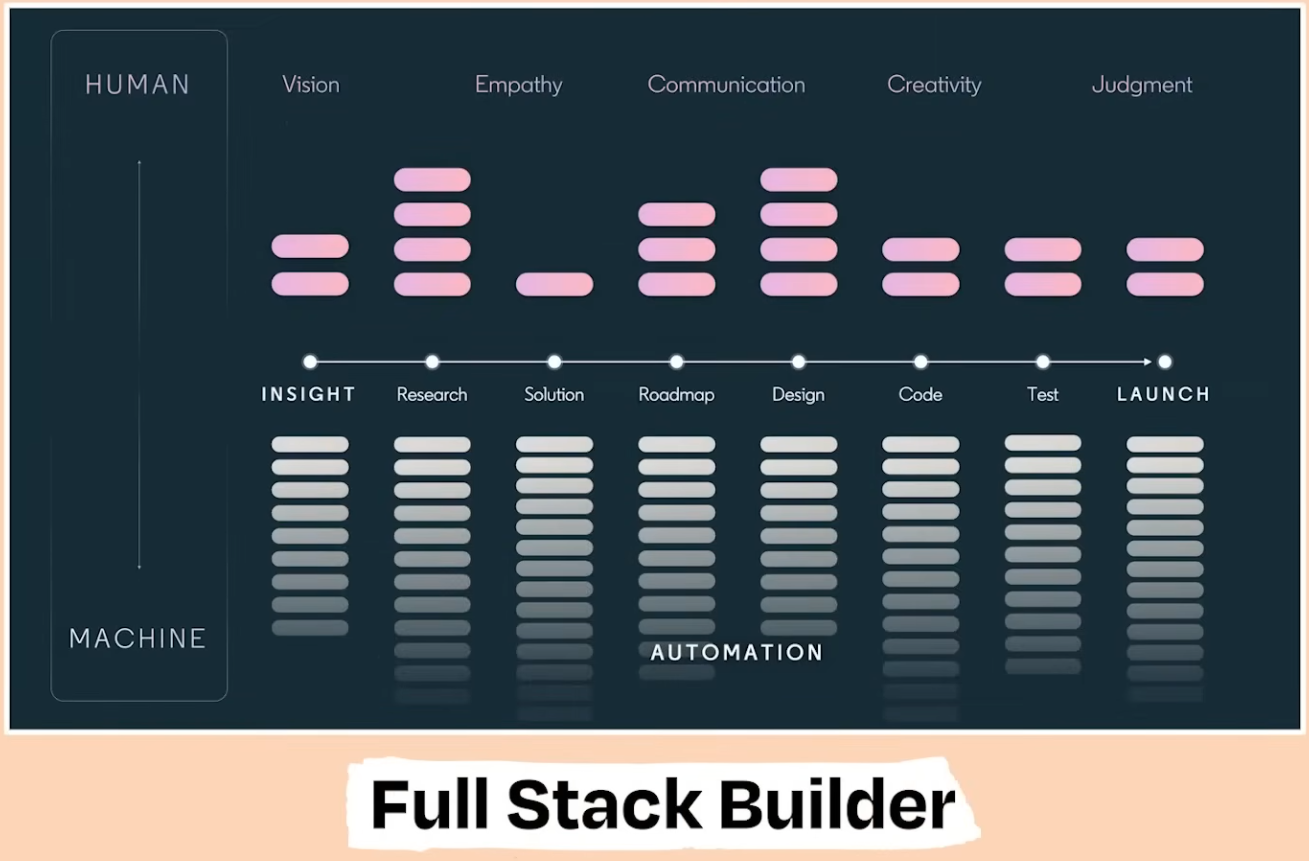
This is the chart that separates "the PM role is over" from "the PM role just leveled up." There are two distinct layers in the Full Stack Builder model.

At the top: Human. Vision. Empathy. Communication. Creativity. Judgment. These are the capabilities at the top of the chart — the bars that every senior PM has been developing for a decade. They can't be automated. Not because AI isn't trying, but because they require the lived understanding of what good looks like, what users actually feel, and when something is subtly wrong.

At the bottom: Machine. All the execution — research synthesis, code generation, design generation, test writing, deployment automation. These are the bars that AI is filling in rapidly, at every stage of the lifecycle.

Human vs Machine — Full Stack Builder chart
Human vs. Machine, across the full lifecycle. Top layer: Vision, Empathy, Communication, Creativity, Judgment — the human skills that drive every stage. Bottom layer: Machine automation filling in execution. This is the Full Stack Builder distribution.

The senior PM who has spent 8+ years knowing what good looks like — in research, in design, in product decisions, in user feedback — is perfectly positioned for the top layer. The question isn't whether you have these skills. You do. The question is whether you can now use them to direct AI through the bottom layer.

Vision
Empathy
Communication
Creativity
Judgment
The Implication
The more AI takes over the bottom layer, the more valuable the top layer becomes. Senior PMs with deep human judgment get significantly more leverage in the Full Stack Builder model — not less. The people who get displaced are those who never developed judgment and relied entirely on execution.
5
The Speed Change Nobody Talks About

Multiple full iterations in the time it used to take to run one.

Here's the part that reframes the entire conversation. It's not just that one person can now span the full lifecycle. It's what happens to speed when you do.

The traditional product development lifecycle took months per iteration. You ran insight, research, solution, roadmap, design, code, test, launch — and by the time you got to launch, it was 6 months later. The next iteration started at the beginning.

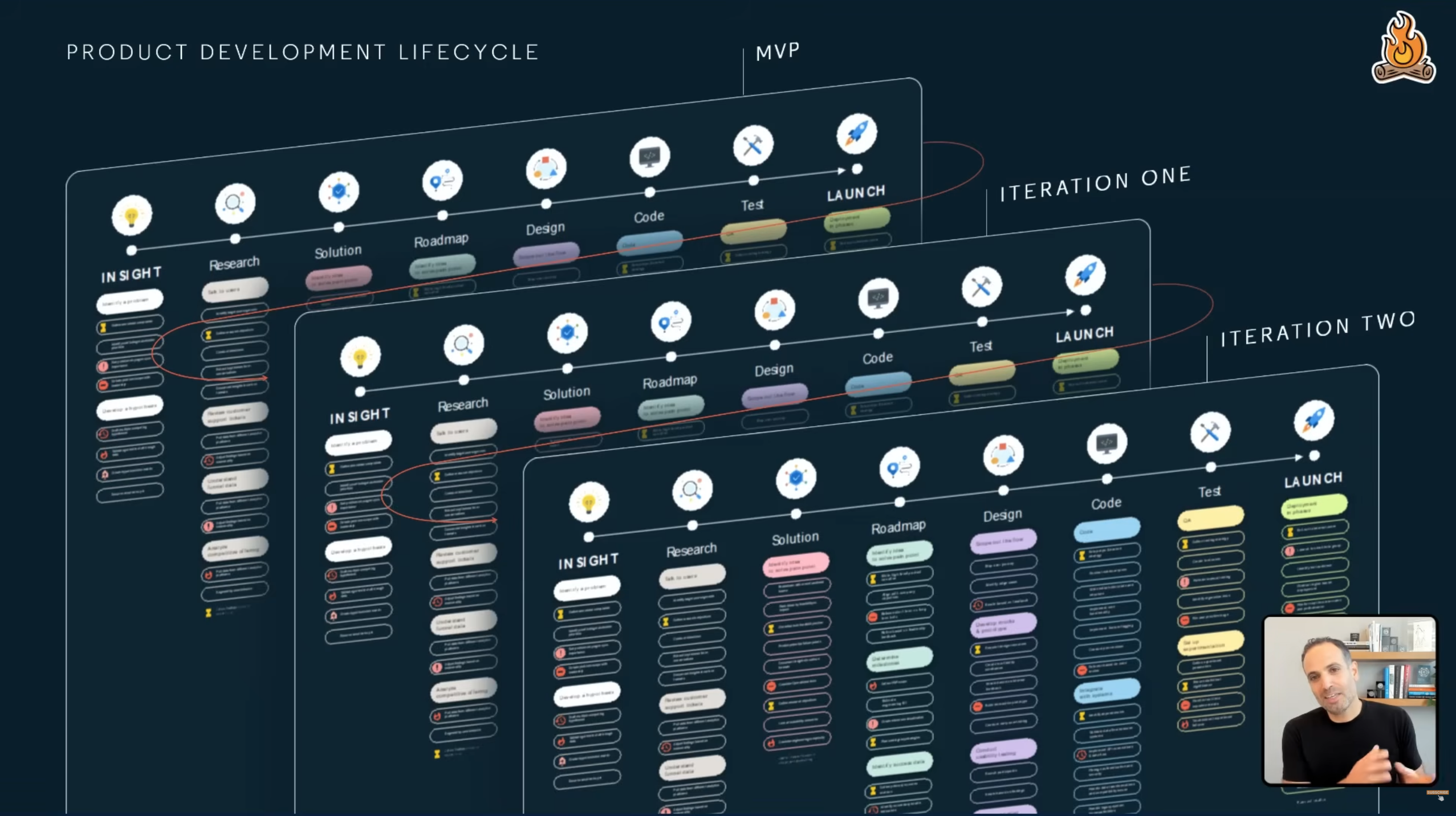
With AI handling execution at every stage, the lifecycle compresses. Dramatically. And Tomer shows exactly what this looks like: MVP → Iteration One → Iteration Two, stacked on top of each other, each one running a full insight-to-launch cycle in the time the old model would have spent in research.

Product lifecycle iterations — MVP, Iteration One, Iteration Two
MVP → Iteration One → Iteration Two. Three complete insight-to-launch cycles, now running in compressed time. The bottleneck has shifted from execution to judgment. How fast can you evaluate, decide, and direct the next iteration?

The bottleneck has moved. It's no longer execution. It's your judgment — how fast you can evaluate whether the output is good, decide what to change, and direct the next iteration. The teams that understand this are shipping at a pace that was impossible two years ago.

"The people winning right now aren't shipping faster because they have more engineers. They're shipping faster because one person with great judgment can now direct AI through an entire lifecycle." — Framing from Tomer Cohen's talk on Lenny's Podcast
6
What This Means If You're Still Mostly Managing

You're not falling behind because you're bad at your job. You're falling behind because the job changed.

Here's the uncomfortable part of this talk. Everything Tomer describes is happening now — not in 3 years, not when AI gets "good enough." The Full Stack Builder model is already being hired for. Specialty PM job postings are already declining. Companies that have adopted it are already iterating faster.

And most senior PMs don't know, because they're busy. Busy in roadmap reviews. Busy managing stakeholder expectations. Busy in Jira. Busy managing in the age of AI — while getting left behind by it.

The cruel irony is that the PMs most at risk are often the most senior ones — the ones who've risen to a level of seniority where they mostly coordinate and rarely build. The junior PMs who never had the luxury of just managing? They've been building with AI out of necessity. They're a year ahead.

The Gap That's Opening
There are now two kinds of senior PMs. The ones who've learned to direct AI through the full lifecycle, and the ones who haven't started yet. The gap between them is growing every month. The skills aren't hard to learn — but they take time to build, and you have to start.

The good news: you already have the hardest part. The 5 human skills — Vision, Empathy, Communication, Creativity, Judgment — those took you a decade to build and they can't be shortcut. What you're missing is the execution fluency: how to actually direct AI agents through design, code, test, and launch. How to evaluate their output. How to know when something is subtly wrong. How to ship.

That's learnable. That's what the cohort is for.

You have the judgment. Now learn the tools.

A 4-week cohort for senior product leaders who are done watching from the sidelines. Free. Cohort 1 starts March 23.

Apply Now →
← Back to the course overview